Introduction
Polycystic Ovary Syndrome (PCOS) is a common hormonal disorder that affects millions of women worldwide, especially during their reproductive years. Despite its prevalence, PCOS is often misunderstood, and many women remain unaware of the full spectrum of symptoms. Early recognition of these symptoms is critical, not only for managing physical health but also for addressing mental and emotional well-being.
PCOS is a complex condition, involving hormonal imbalances, metabolic changes, and irregularities in ovarian function. It can manifest differently in every individual, which sometimes leads to delayed diagnosis. Understanding the signs and symptoms of PCOS is the first step toward effective management and improved quality of life.
This article provides a detailed exploration of PCOS symptoms, including physical, hormonal, metabolic, and emotional indicators, along with insights into causes, risk factors, and strategies for early detection.
Understanding PCOS
What is PCOS?
Polycystic Ovary Syndrome (PCOS) is a hormonal disorder that affects the ovaries, the reproductive organs responsible for producing eggs and female hormones like estrogen and progesterone. In PCOS, women often experience:
-
Hormonal Imbalances: Elevated levels of androgens (male hormones) can disrupt menstrual cycles and affect physical appearance.
-
Ovarian Dysfunction: Ovaries may develop small cysts due to irregular or absent ovulation.
-
Metabolic Changes: Insulin resistance and weight fluctuations are commonly associated with PCOS.
The name “polycystic” refers to the presence of multiple small cysts in the ovaries, though not all women with PCOS develop cysts. Diagnosis is usually based on a combination of clinical symptoms, hormonal evaluations, and imaging studies.
Causes of PCOS
The exact cause of PCOS is not fully understood, but several factors contribute to its development:
-
Hormonal Imbalance: Increased androgen production disrupts the menstrual cycle and may lead to symptoms like acne and excess hair growth.
-
Insulin Resistance: Elevated insulin levels can worsen androgen production, contributing to weight gain and irregular periods.
-
Genetic Factors: Family history plays a role, suggesting that PCOS may run in families.
-
Inflammation: Chronic low-grade inflammation is associated with increased androgen levels in women with PCOS.
Common Symptoms of PCOS
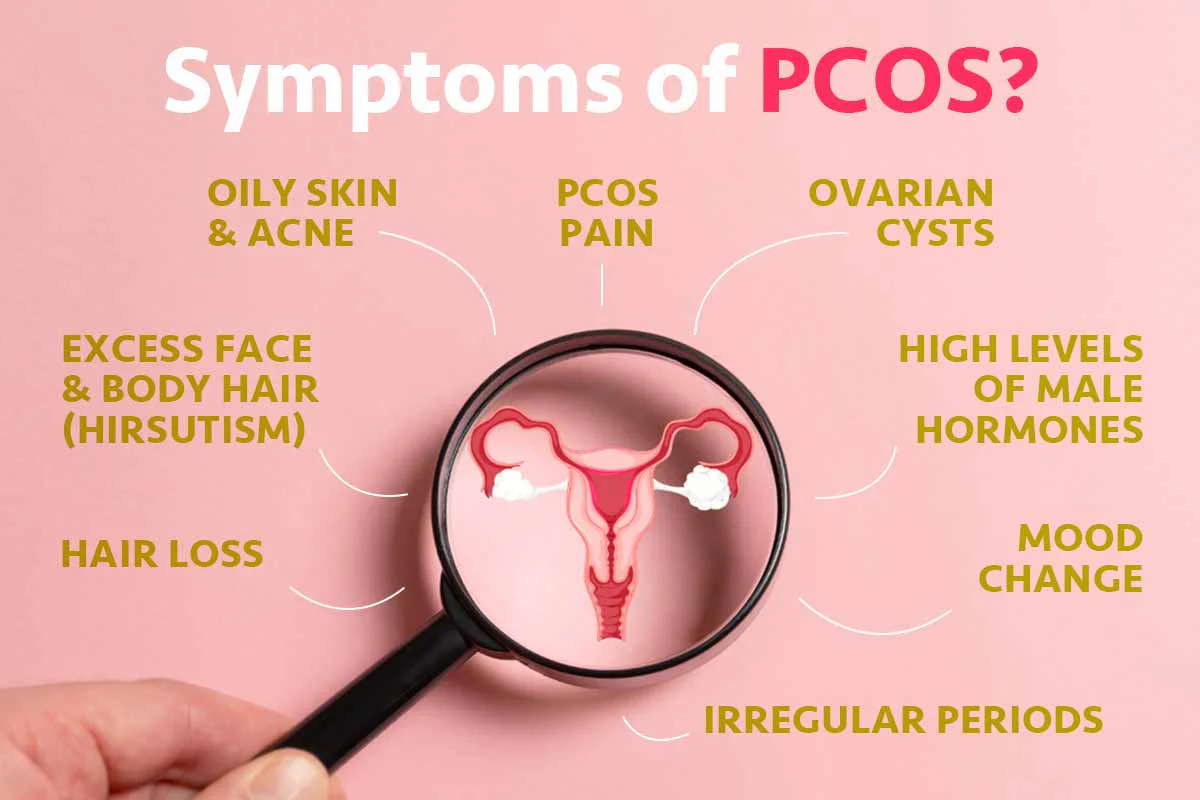
PCOS manifests differently in every woman, making symptom recognition crucial for timely diagnosis and management. The most common symptoms include:
1. Irregular Menstrual Cycles
One of the hallmark signs of PCOS is menstrual irregularity. Women with PCOS may experience:
-
Infrequent periods (fewer than 8 cycles a year)
-
Prolonged cycles (more than 35 days between periods)
-
Skipped periods or amenorrhea (absence of menstruation)
-
Heavy bleeding during menstrual periods
These irregularities result from disrupted ovulation due to hormonal imbalances. In some cases, women may not realize they have PCOS until trying to conceive, as fertility issues often bring attention to the disorder.
2. Excess Androgen Levels
High levels of androgens (male hormones) can lead to several noticeable physical changes:
-
Hirsutism: Excess hair growth on the face, chest, back, or abdomen
-
Acne: Persistent or severe acne that does not respond to conventional treatments
-
Thinning Hair on the Scalp: Hair loss or male-pattern baldness in some women
The severity of androgen-related symptoms varies, and some women may have high androgen levels without obvious physical changes.
3. Polycystic Ovaries
On ultrasound, women with PCOS may show multiple small cysts on the ovaries, typically 2–9 mm in diameter. Not all women with PCOS have visible cysts, and not all women with ovarian cysts have PCOS. Cysts form due to follicles that fail to mature and release eggs, disrupting ovulation and contributing to irregular periods.
4. Weight Gain and Difficulty Losing Weight
Many women with PCOS struggle with weight gain, particularly around the abdomen. This is often linked to insulin resistance, which makes it harder for the body to use insulin effectively. Even modest weight loss can improve insulin sensitivity and reduce other PCOS symptoms.
5. Skin and Scalp Changes
Women with PCOS often experience skin changes, including:
-
Acne and oily skin due to elevated androgen levels
-
Darkened skin patches (acanthosis nigricans) around the neck, armpits, or groin
-
Skin tags — small, benign growths in skin folds
Scalp hair thinning or hair loss can also occur, contributing to emotional distress.
6. Fertility Issues
PCOS is one of the leading causes of infertility in women. Irregular ovulation or anovulation (absence of ovulation) prevents regular egg release, making conception difficult. Many women only discover PCOS when they face challenges trying to get pregnant.
7. Emotional and Psychological Symptoms
PCOS is associated with increased risk of mental health issues, including:
-
Anxiety and depression
-
Mood swings
-
Low self-esteem due to physical symptoms like weight gain, acne, or hirsutism
Psychological symptoms are often overlooked but can significantly impact quality of life.
Less Common Symptoms of PCOS
In addition to the primary symptoms, some women experience:
-
Sleep disturbances, including sleep apnea
-
Pelvic pain or discomfort
-
Fatigue or low energy levels
-
Digestive issues, potentially linked to insulin resistance
These symptoms may be subtle and develop gradually, making it important for women to monitor changes in their health over time.
How PCOS Symptoms Vary Among Women
PCOS does not affect every woman in the same way. Symptom severity can vary depending on:
-
Age: Younger women may notice irregular periods first, while older women may experience metabolic symptoms.
-
Weight: Overweight women often have more severe insulin resistance, acne, or hair growth issues.
-
Genetics: Family history may influence which symptoms are most pronounced.
-
Lifestyle Factors: Diet, physical activity, and stress levels can affect symptom severity.
Some women may only have mild symptoms, while others experience multiple physical, emotional, and metabolic challenges.
Diagnosing PCOS
Early recognition of PCOS symptoms is crucial, but diagnosis typically requires a combination of clinical evaluation, lab tests, and imaging studies:
-
Medical History and Physical Examination – Doctors assess menstrual patterns, weight changes, and physical signs of hyperandrogenism.
-
Blood Tests – Hormone levels (androgens, LH, FSH) and insulin resistance markers are measured.
-
Ultrasound Imaging – Checks for polycystic ovaries and ovarian morphology.
-
Exclusion of Other Conditions – Thyroid disorders, adrenal disorders, and other causes of menstrual irregularities are ruled out.
A proper diagnosis helps tailor a management plan, including lifestyle interventions, medications, and fertility support if needed.
Managing Symptoms of PCOS
Although PCOS has no permanent cure, its symptoms can be effectively managed through lifestyle changes, medical interventions, and psychological support:
1. Lifestyle Modifications
-
Diet: Balanced nutrition with low glycemic index foods helps control insulin resistance and weight.
-
Exercise: Regular physical activity improves insulin sensitivity and supports weight management.
-
Stress Management: Yoga, meditation, or counseling can help alleviate emotional symptoms.
2. Medications
-
Hormonal Contraceptives: Regulate menstrual cycles and reduce androgen-related symptoms.
-
Metformin: Improves insulin sensitivity and may help with weight management.
-
Fertility Treatments: Medications to induce ovulation for women trying to conceive.
-
Anti-Androgen Drugs: Reduce hair growth and acne in women with significant androgen excess.
3. Psychological Support
Mental health is an essential component of PCOS management. Therapy, support groups, and counseling can help women cope with body image concerns, anxiety, and depression associated with PCOS.
Complications Linked to PCOS
If left untreated, PCOS can increase the risk of several long-term health issues:
-
Type 2 Diabetes due to insulin resistance
-
Cardiovascular Disease from obesity, high blood pressure, and abnormal cholesterol levels
-
Endometrial Cancer due to prolonged irregular periods
-
Fertility Challenges or complications during pregnancy
-
Mental Health Disorders like depression and anxiety
Awareness and early symptom management are key to reducing these risks.
When to See a Doctor
Women should seek medical attention if they experience:
-
Irregular or absent periods
-
Unexplained weight gain or difficulty losing weight
-
Excessive hair growth or acne
-
Fertility difficulties
-
Persistent fatigue, mood changes, or signs of insulin resistance
Early consultation helps prevent long-term complications and improves quality of life.
Conclusion
PCOS is a multifaceted hormonal disorder that affects women physically, emotionally, and metabolically. Symptoms range from irregular menstrual cycles and excess hair growth to weight gain, acne, and fertility issues. Because PCOS can manifest differently in each individual, awareness and early recognition are critical.
Regular medical check-ups, proper diagnosis, lifestyle interventions, and appropriate medical treatment can help manage PCOS effectively. Emotional support and mental health care are equally important in maintaining overall well-being.
Understanding PCOS symptoms empowers women to take charge of their health, seek timely medical advice, and lead a balanced, fulfilling life despite the challenges posed by this condition.