INTRODUCTION: WHERE MYTHOLOGY MEETS THE MOUNTAINS
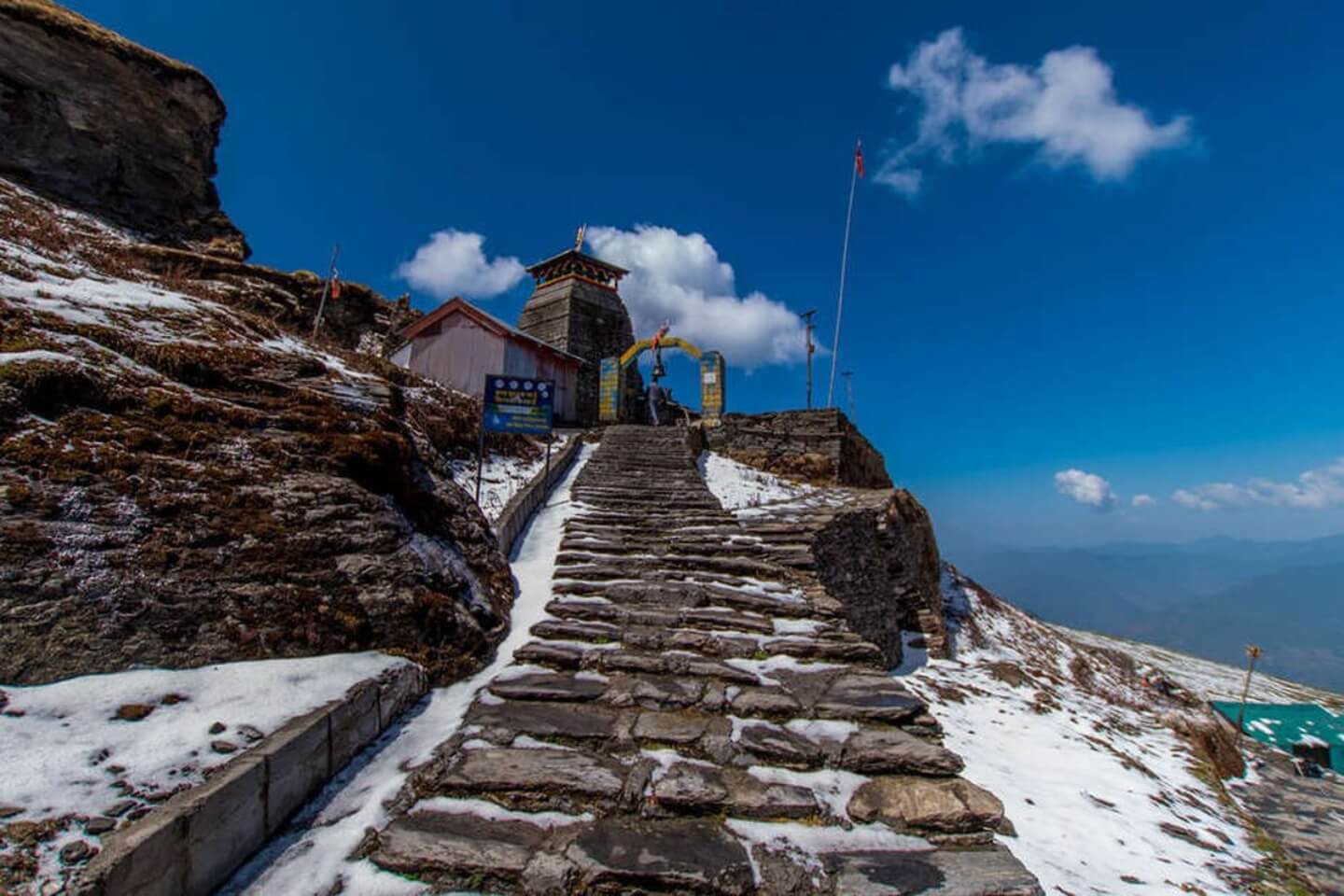
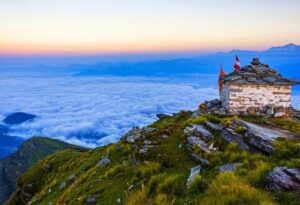
If landscapes had souls, the Himalayas would surely be among the oldest and wisest guardians of human civilization. From sages meditating under ancient forests to modern trekkers seeking adventure and peace, the mountains of Uttarakhand have inspired countless journeys of the body and soul. Among these sacred landscapes lies Tungnath, the highest Shiva temple in the world—an ethereal sanctuary perched at a breathtaking altitude of 3,680 meters (12,073 feet).
The Tungnath Trek, beginning from Chopta, is an exceptional blend of spirituality, adventure, mythology, natural beauty, biodiversity, and Himalayan culture. From stone-crafted ancient temples to the snow-clad Chandrashila peak, this trail offers a rich and transformative experience. It is not merely a trek; it is an unfolding story—of gods and demons, of kings and sages, and of the mountains that hold them together.
This comprehensive article has been crafted to serve as the most detailed Tungnath Trek travel guide available online, written with a professional blog format and a human storytelling tone. Whether you’re a trekker, pilgrim, photographer, spiritual traveler, or curious explorer, this guide gives you everything you need to know: routes, history, accommodation, difficulty, weather, costs, packing, photography, safety, tips, and complete itineraries.
Let’s begin your journey through Uttarakhand’s divine landscapes.
1. THE LEGEND AND LORE OF TUNGNATH: MYTHOLOGY THAT BREATHES THROUGH STONE
Panch Kedar and the Story of Lord Shiva’s Disappearance
Tungnath is the second temple of the sacred Panch Kedar pilgrimage circuit, an ancient set of five Shiva temples believed to have been built by the Pandavas after the Kurukshetra war. The story goes:
After the Mahabharata war ended, the Pandavas sought forgiveness from Lord Shiva for killing their own relatives during the battle. But Shiva did not wish to meet them. Disguised as a bull (Nandi), he hid in the Garhwal Himalayas.
When the Pandavas pursued him relentlessly, the bull suddenly disappeared into the earth. His body is believed to have reappeared in five different locations, forming the Panch Kedar temples:
-
Kedarnath – the hump
-
Tungnath – the arms
-
Rudranath – the face
-
Madhmaheshwar – the navel
-
Kalpeshwar – the hair
Thus, Tungnath is no ordinary temple. It is considered the place where Shiva’s arms (bahu) appeared. This legend gives the Tungnath trek a sense of timelessness—every rock, every stone, every gust of wind carries whispers of an ancient past.
2. LOCATION: WHERE EXACTLY IS TUNGNATH?
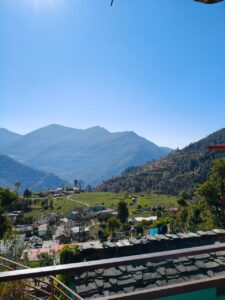
Tungnath lies in the Rudraprayag district of Uttarakhand, in the heart of the Kedarnath Wildlife Sanctuary. The trek begins from the meadow-rich village of Chopta, often called Mini Switzerland of India.
Distances from major cities:
-
Rishikesh → Chopta: 160 km
-
Haridwar → Chopta: 190 km
-
Dehradun → Chopta: 200 km
-
Delhi → Chopta: 450 km
Chopta itself sits at an altitude of 2,680 m, surrounded by forests of pine, oak, deodar, and rhododendron.
3. WHY THE TUNGNATH TREK IS ONE OF THE BEST TREKS IN INDIA
A. Highest Shiva Temple in the World
A spiritual and historical landmark, unmatched in altitude and significance.
B. Beginner-Friendly Trek
Only 3.5 km to Tungnath and 1.5 km further to Chandrashila.
C. Stunning Views
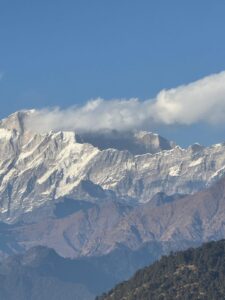
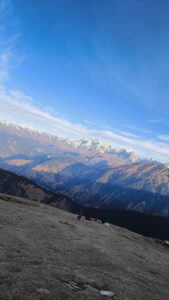
The trek offers mesmerising panoramic views of:
-
Chaukhamba
-
Kedarnath Peak
-
Trishul
-
Nanda Devi
-
Bandarpunch
D. Evergreen Forests and Flora
Chopta and Tungnath are biodiversity hotspots.
E. Sunrise at Chandrashila
Considered one of the BEST sunrise points in all of India.
F. Snow Trek in Winter
One of the safest and shortest winter treks in Uttarakhand.
G. Rich Local Culture
Garhwali traditions, folklore, and rural hospitality make this trek memorable.
4. HOW TO REACH CHOPTA – COMPLETE TRANSPORT GUIDE
By Train
Best option: Haridwar Railway Station
From Haridwar → take a bus/shared taxi to:
-
Rudraprayag
-
Ukhimath
-
Chopta
By Flight
Nearest airport: Jolly Grant Airport, Dehradun (220 km)
Taxis are available to Chopta.
By Road
Popular route from Rishikesh:
Rishikesh → Devprayag → Srinagar → Rudraprayag → Ukhimath → Chopta
5. BEST TIME TO VISIT TUNGNATH TREK (SEASON-WISE ANALYSIS)
SUMMER (April–June)
✓ Best for beginners
✓ Temple opens in May
✓ Pleasant weather
MONSOON (July–August)
✗ Landslide-prone
✗ Not recommended for inexperienced trekkers
AUTUMN (September–November)
✓ BEST TIME: clear skies, perfect views
✓ Ideal for photographers
WINTER (December–March)
✓ Snow trek lovers
✓ Tungnath temple closed
✓ Requires guide & gear
6. WEATHER GUIDE (MONTH-WISE)
| Month | Weather | Temperature |
|---|---|---|
| April | Cool, fresh | 5–15°C |
| May | Ideal | 8–18°C |
| June | Warm, pleasant | 10–20°C |
| July–Aug | Rainy | 8–15°C |
| Sept | Clear skies | 5–14°C |
| Oct | Cold mornings | 0–10°C |
| Nov | Very cold | -5–8°C |
| Dec–Feb | Snowfall | -10 to 5°C |
| March | Snow melting | -3–8°C |
7. COMPLETE STEP-BY-STEP TREK ROUTE EXPLAINED
Chopta → Tungnath (3.5 km)
The trek begins with stone steps rising gently through a dense forest. The trail is scenic from the very first minute.
Landmarks:
-
Forest Gate
-
First Tea Shop (1 km)
-
Second Tea Point (2 km)
-
Tungnath Temple Gate
The ascent is moderately steep in the final 1 km. The stone-paved path ensures safety.
Tungnath → Chandrashila Peak (1.5 km)
The path becomes steeper and rockier. In winter, it remains covered with snow.
Walking time: 45 min to 1.5 hours depending on fitness.
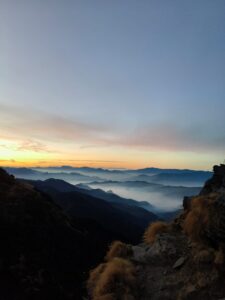
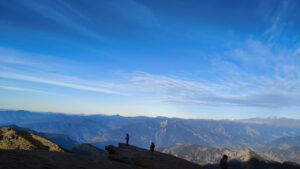
Once you reach the top, the experience is otherworldly. The entire Garhwal and Kumaon range unfolds before you like a painting.
8. DETAILED 2, 3 AND 4-DAY ITINERARIES
2-DAY QUICK ITINERARY
Day 1: Reach Chopta
-
Check into homestay
-
Explore Chopta meadows
-
Rest early
Day 2: Trek Chopta → Tungnath → Chandrashila
-
Start at 5 AM
-
Sunrise at Chandrashila (optional)
-
Return by afternoon
3-DAY ITINERARY
Day 1: Haridwar → Chopta
Relax and prepare.
Day 2: Chopta → Tungnath → Chandrashila
Return to Chopta.
Day 3: Visit Deoriatal Lake
A beautiful nearby lake with Chaukhamba reflections.
4-DAY DETAILED ITINERARY
Day 1: Arrive in Chopta
Day 2: Tungnath Trek
Day 3: Chandrashila Sunrise + Deoriatal
Day 4: Return
Ideal for photographers and families.
9. ACCOMMODATION GUIDE – WHERE TO STAY?
Chopta Accommodations
Budget Homestays (₹800–1500)
-
Basic rooms
-
Local food
-
Best cultural experience
Mid-Range Cottages (₹1500–3000)
-
Better washrooms
-
Comfortable stay
Luxury Swiss Camps (₹2500–5000)
-
Bonfire
-
Scenic views
-
Premium bedding
Accommodation at Tungnath
Very limited, basic dharamshala-style rooms:
-
Stone rooms
-
Shared toilets
-
No heaters
Better to stay in Chopta.
10. FOOD AND WATER
Food Options
Available at:
-
Chopta dhabas
-
Homestays
-
Food stalls on the trekking trail
Common dishes:
-
Maggi
-
Tea
-
Parathas
-
Aloo-puri
-
Egg curry
-
Dal-chawal
-
Rajma-chawal
Water
Carry:
-
1–1.5 L bottle
-
Refill at shops
11. BUDGET & COST BREAKDOWN (REALISTIC ESTIMATES)
| Category | Cost |
|---|---|
| Transport | ₹2000–₹4000 |
| Stay (2 nights) | ₹1600–₹6000 |
| Food | ₹600–₹1200 |
| Guide | ₹800–₹1500 |
| Misc | ₹500 |
Total Budget:
₹4,000 (low budget) → ₹12,000 (comfortable)
12. ESSENTIAL PACKING LIST
For Summer
-
Light jacket
-
Raincoat
-
Trek pants
-
Sunglasses
For Winter
-
Heavy down jacket
-
Thermal layers
-
Waterproof gloves
-
Microspikes (mandatory)
-
Trekking pole
General Essentials
-
Sunscreen
-
Lip balm
-
Power bank
-
First aid kit
-
ID proof
-
Dry fruits
13. FITNESS REQUIREMENTS
Tungnath is beginner-friendly, but fitness helps.
10-day preparation plan:
-
30 mins walk daily
-
10 mins stretching
-
Staircase climb (up & down 20 mins)
-
20 squats daily
You’ll be perfectly ready.
14. BIODIVERSITY & WILDLIFE
Chopta lies inside a protected sanctuary.
You may see:
-
Himalayan Monal
-
Musk Deer
-
Himalayan Tahr
-
Pikas
-
Snow Partridge
Flora includes:
-
Oak
-
Pine
-
Deodar
-
Rhododendron
15. PHOTOGRAPHY GUIDE – BEST SPOTS
1. Chopta Meadows
Perfect for sunrise.
2. Forest Trail
Rhododendron blooms in April–May.
3. Tungnath Temple
Captures spirituality amidst mountains.
4. Chandrashila Summit
Unmatched 360-degree Himalayan photos.
5. Deoriatal
Reflection photography.
16. SAFETY TIPS
-
Start early.
-
Avoid trekking in thunderstorms.
-
Drink water regularly.
-
Don’t trek alone in winter.
-
Avoid alcohol.
-
Wear proper trekking shoes.
-
Check weather forecast.
17. TUNGNATH IN WINTER – A SNOWY WONDERLAND
Winter transforms Tungnath into a silent white world.
Expect:
-
Deep snow
-
Frozen pathways
-
No tea shops
-
Icy winds
Essential:
-
Snow boots
-
Microspikes
-
Waterproof gloves
-
Professional guide
This version of the trek is magical but challenging.
18. CHANDRASHILA – THE ROOF OF GARHWAL
Chandrashila means “Moon Rock”.
Height: approx. 4000 meters
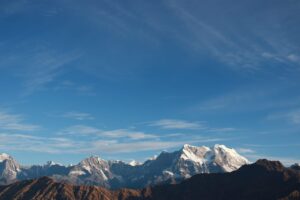
You can see:
-
Nanda Devi
-
Trishul
-
Chaukhamba
-
Kedarnath Peak
-
Dunagiri
-
Mukut Parbat
Sunrise here is unforgettable.
19. LOCAL CULTURE & GARHWALI LIFE
People speak Garhwali & Hindi.
Cultural highlights:
-
Folk songs
-
Jagar rituals
-
Local temples
-
Rhododendron juice (Buransh)
-
Organic farming
Locals are humble, warm, and honest.
20. RESPONSIBLE TREKKING RULES
-
Carry trash back
-
Respect wildlife
-
Avoid plastic
-
Support local homestays
-
Don’t pluck flowers
-
Keep noise low
21. FREQUENTLY ASKED QUESTIONS
Is Tungnath trek safe?
Yes, very safe.
Can children trek?
Yes, kids above 8 years.
Are guides needed?
Not in summer, yes in winter.
How far is the trek?
3.5 km to Tungnath, +1.5 km to Chandrashila.
Can we camp near the temple?
No, camping not allowed.
CONCLUSION – WHY TUNGNATH TREK IS A MUST-DO
Whether you seek spirituality, nature, adventure, photography, or self-discovery—the Tungnath Trek gives it all. It is short yet rewarding, simple yet dramatic, ancient yet timeless.
You walk through forests older than cities, climb paths carved by pilgrims centuries ago, and stand at temple gates touched by divine legends. Then you ascend to Chandrashila, where the first rays of the sun paint the snow peaks golden—and remind you of how small, yet blessed, we truly are.
The Tungnath Trek is not just a journey.
It is a memory.
A prayer.
An awakening.
And one of the most beautiful short Himalayan treks you’ll ever experience.