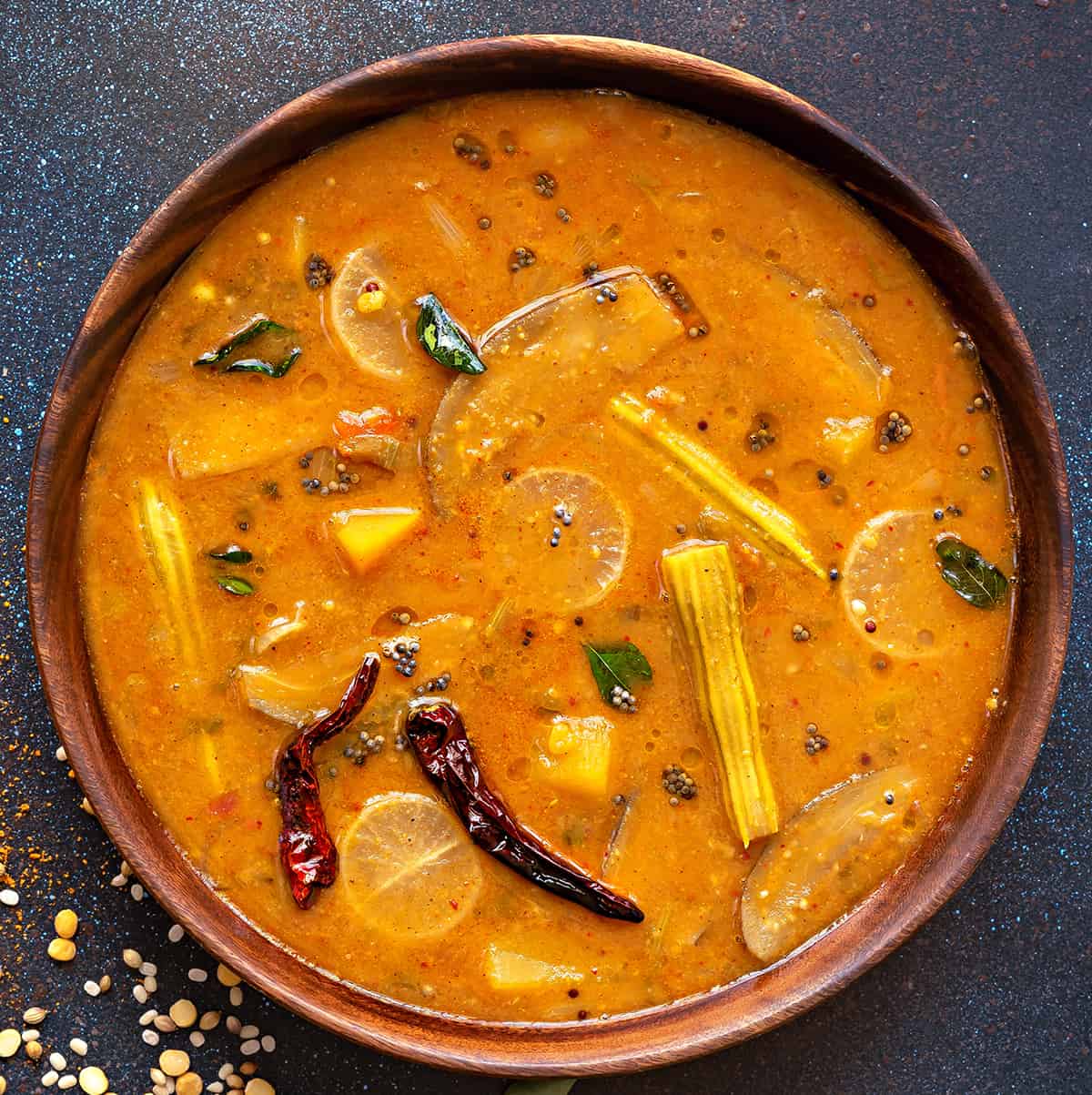
Sambar. Just saying the word brings a smile to anyone who grew up in South India—or anyone who has ever been to a South Indian restaurant abroad. It’s tangy, spicy, slightly sweet sometimes, thick but not too thick, and absolutely perfect with rice, idli, dosa, vada…basically everything. Some people will tell you it’s “just lentils and tamarind,” but if you’ve ever tried to make it yourself, you know there’s a lot more to it than that. The balance of spices, the right amount of tamarind, perfectly cooked lentils, tender but not mushy vegetables…get one of those wrong and your sambar is a sad bowl of mushy mess.
I’ve made it wrong more times than I can count—too sour, too bland, too watery, too thick. And yet, somehow, every single time I end up loving it anyway. That’s the beauty of sambar.
In this article, I want to take you on a journey—not just a recipe—but everything you need to know about sambar. From its history to why every household has its own version, the exact ingredients, tips and tricks for perfect sambar, common mistakes, regional variations, modern adaptations, and even some personal notes that you won’t find in a normal recipe.
By the end of this, you’ll know sambar almost as well as your grandmother does…almost.
A Little History (or a Long One, Depending on Who You Ask)
Sambar is originally from South India, that much is certain. But who actually invented it? There are stories. Some say it was born in the royal kitchens of Tamil Nadu, meant to be a nutritious, filling accompaniment to rice. Others say it evolved over centuries from simple lentil stews cooked with tamarind—tamarind being a staple in South Indian cooking. Honestly, we’ll never know for sure, but what we do know is that sambar has been on breakfast tables, lunch spreads, and dinner plates for hundreds of years.
Culturally, it’s huge. In Tamil Nadu, Karnataka, Kerala, and Andhra Pradesh, sambar isn’t just food—it’s tradition. Festivals, weddings, special occasions, everyday meals—sambar is always there. Every family has a “secret” ingredient or method that they swear makes theirs the best. Drumsticks, pumpkin, carrots, tomatoes, tamarind paste, or homemade tamarind extract—it all depends. And don’t even get me started on sambar powder. Every household swears their mix is better than store-bought.
Even outside India, sambar has found a home. In countries with large Indian communities, restaurants serve it with idli and dosa, and suddenly sambar becomes not just a dish, but a cultural ambassador.
What Makes Sambar So Special?
At first glance, it’s “just lentils and tamarind,” like I said. But it’s more than that. It’s the way the lentils cook perfectly, the vegetables retain some bite, the sambar powder gives a gentle kick, and the tadka (tempering) with mustard seeds, curry leaves, dried chilies, and a pinch of hing elevates it to another level.
It’s versatile, too. You can make it thin or thick, mild or spicy, vegetarian or even with some twists like coconut or millet. It’s nutritious, cheap, and quick—well, quick if you have a pressure cooker, otherwise it’s a bit of a patience game.
The best part? You can serve it with almost anything: rice, dosa, idli, vada, chapati. Even plain steamed rice with a ladle of sambar is one of life’s simple joys.
Ingredients and Why They Matter
Let’s talk ingredients because this is where most people make mistakes.
The Basics
-
Toor Dal (Pigeon Peas):
-
The star of the dish. Don’t substitute with something totally random unless you know what you’re doing.
-
Provides protein and body to the sambar.
-
-
Tamarind:
-
Gives sambar its signature tang. Too little, and it’s boring. Too much, and it puckers your tongue.
-
Fresh tamarind is ideal, but paste or concentrate works in a pinch.
-
-
Vegetables:
-
Common choices: drumsticks, pumpkin, carrots, beans, okra, eggplant, tomatoes.
-
Cut vegetables into similar sizes to ensure even cooking.
-
-
Sambar Powder:
-
The soul of sambar. Freshly roasted and ground is best, but store-bought works.
-
Usually a mix of coriander seeds, dried red chilies, cumin, fenugreek, and other spices.
-
-
Tempering Ingredients (Tadka):
-
Mustard seeds, curry leaves, dried red chilies, a pinch of hing.
-
A small amount of oil or ghee to fry these. Adds aroma and flavor.
-
-
Turmeric:
-
Adds subtle color and flavor.
-
-
Salt and Sugar (Optional):
-
Balances flavors. Some households add a pinch of jaggery for sweetness.
-
Step-by-Step Traditional Sambar
Here’s the way I’ve made sambar hundreds of times, and it works almost every time.
Ingredients (for 4–5 servings):
-
1 cup toor dal (pigeon peas)
-
2–3 cups water (for cooking lentils)
-
1–1.5 cups tamarind extract
-
1–2 tbsp sambar powder (adjust to taste)
-
1 tsp turmeric powder
-
1 medium carrot, chopped
-
1 small drumstick, cut into pieces
-
½ cup pumpkin, chopped
-
1 small eggplant, chopped
-
1 medium tomato, chopped
-
2 tsp oil or ghee
-
1 tsp mustard seeds
-
1 tsp cumin seeds
-
1–2 dried red chilies
-
A pinch of hing (asafoetida)
-
Curry leaves
-
Salt to taste
-
Fresh coriander leaves for garnish
Step 1: Cook the Lentils
-
Wash the toor dal thoroughly.
-
Pressure cook with turmeric and water until soft (usually 3–4 whistles).
-
Mash lightly for smooth consistency. Don’t overdo it—you still want some texture.
Step 2: Prepare Tamarind
-
Soak tamarind in warm water for 15–20 minutes.
-
Extract pulp and strain if you want smooth sambar. Some people like bits—it’s okay.
Step 3: Cook the Vegetables
-
Boil vegetables in water until partially cooked. They’ll finish cooking in the sambar itself.
Step 4: Combine Dal, Tamarind, and Vegetables
-
Add tamarind extract to the cooked dal.
-
Add vegetables and sambar powder.
-
Simmer for 10–15 minutes, adjusting water to get desired consistency.
Step 5: Tempering (Tadka)
-
Heat oil or ghee.
-
Add mustard seeds, cumin seeds, dried red chilies, curry leaves, and hing.
-
Pour over the simmering sambar.
Step 6: Final Touches
-
Add salt to taste.
-
Garnish with fresh coriander leaves.
-
Serve hot with rice, idli, or dosa.
Pro tip: Taste as you go. Humans make mistakes; adjust water, spice, and tamarind gradually.
Common Mistakes (That I Made Way Too Often)
-
Too sour: Tamarind added too early or too much.
-
Lumpy lentils: Didn’t mash or cook fully.
-
Vegetables overcooked: Chop evenly and boil partially first.
-
Bland flavor: Skimped on sambar powder or tadka.
Regional Variations
-
Tamil Nadu: Classic, often with drumsticks and lots of tamarind.
-
Karnataka: Slightly thinner consistency, mild.
-
Andhra Pradesh/Telangana: Spicier, sometimes with garlic.
-
Kerala: Coconut-based or mild sambar with less tang.
-
Modern twists: Millet sambar, quinoa sambar, mixed lentil sambar.
Serving Suggestions
-
With steaming rice: classic comfort.
-
With idli, dosa, vada: breakfast heaven.
-
With chapati or poori: unconventional but tasty.
-
Even with upma or pongal if you’re adventurous.
Advanced Tips
-
Roast sambar powder for deeper flavor.
-
Add tamarind towards the end for balance.
-
Slight pinch of jaggery balances tanginess.
-
Fresh coriander leaves make a huge difference in aroma.
Modern Twists
-
Quinoa or millet sambar: healthier and gluten-free.
-
Mixed lentil sambar: toor + moong + masoor for richer taste.
-
Seasonal vegetable sambar: zucchini, bell peppers, spinach.
-
Instant sambar: ready-made paste, quick but less authentic.
Why Sambar Will Never Go Out of Style
Sambar is more than food. It’s tradition, comfort, nostalgia, and versatility all in one bowl. You can experiment endlessly, but the essence stays the same—lentils, tamarind, spices, and a little love.
It’s one of those dishes that brings people together. Families argue over whose sambar is best, restaurants serve it with pride, and even if you make it wrong, it’s still pretty good.
And that’s why sambar endures. Simple yet complex, humble yet celebratory, a true gem of South Indian cuisine.